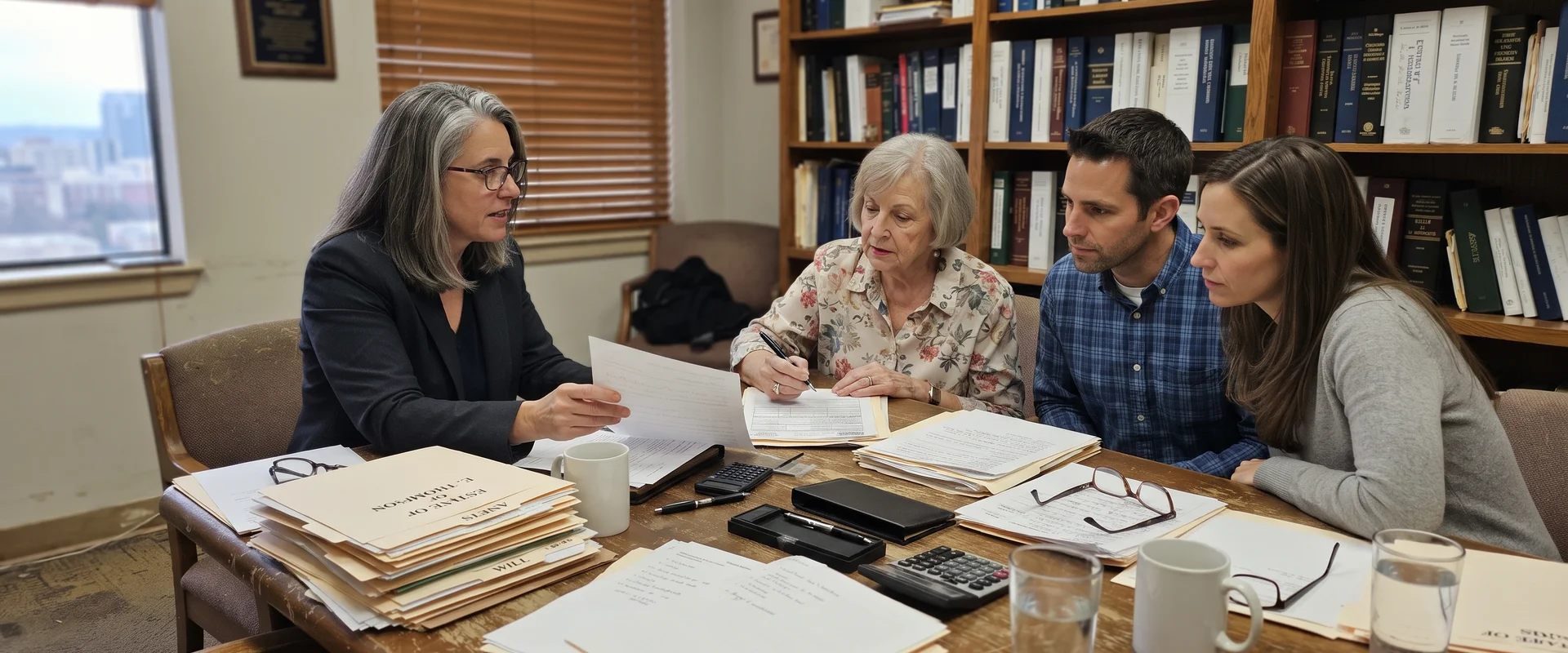
Probate & Estate Administration in Charlotte
Compare 30 Charlotte probate and estate administration attorneys. See what the job involves, what to look for, and how our scoring works.
Probate and estate administration is the legal process of settling someone's affairs after they die: proving the will (or applying North Carolina's intestacy rules if there isn't one), inventorying assets, paying debts and taxes, and distributing what's left to heirs. In Mecklenburg County, this runs through the Clerk of Superior Court's estates division, and depending on the size and complexity of the estate it can take anywhere from a few months to well over a year. An attorney in this space typically handles the court filings, guides the executor or administrator through their duties, resolves creditor claims, deals with real estate or business interests inside the estate, and steps in when heirs disagree or a will is contested.
We've listed 30 firms in Charlotte that handle this work. Some are solo practitioners who focus narrowly on probate, others are larger estate planning firms that also draft wills and trusts and handle administration as a follow-on service. Before hiring, ask how often they actually appear before the Mecklenburg Clerk of Court, whether they charge flat fees or hourly for administration work, who on staff will handle the day-to-day filings, and how they handle estates that turn out to be more complicated than expected (a contested will, an insolvent estate, or out-of-state property).
Our ranked guide scores each firm on factors like experience with local probate court, responsiveness, fee transparency, and client feedback, so you can compare options without having to interview all 30 yourself. See the full breakdown at our best estate planning attorneys in Charlotte guide, and read how we build these rankings on our methodology page.
Let us connect you with probate & estate administration
No obligation, and it is free. Tell us what you need and we'll connect you with estate planning attorneys in Charlotte who handle your situation.
All probate & estate administration, ranked by score and relevance
We found 84 businesses offering probate & estate administration; 7 met the criteria for the scored directory. The order weighs each business's overall score by how much of its reviewed work is probate & estate administration, so a lower-scored specialist can rank above a higher-scored generalist. Filter and sort below, or open the full map view.






When you submit an enquiry through our forms, we may pass it to partner providers who can do the work, and we may receive a referral fee. Our rankings and scores come from our published method only and are never influenced by referral fees.
Common questions about probate & estate administration
- How much does probate cost in Charlotte, NC?
- Attorney fees for probate vary by firm and estate complexity. Some Charlotte firms charge flat fees for straightforward estates, often in the low thousands of dollars, while others bill hourly, which can run higher for contested or complex estates. On top of attorney fees, expect court filing fees and a probate bond in some cases. Ask for a written fee structure before you sign on.
- Does every estate have to go through probate in North Carolina?
- No. Assets held jointly with survivorship rights, accounts with named beneficiaries (like life insurance or retirement accounts), and property held in a trust generally bypass probate. North Carolina also has a simplified process for small estates under a certain value. Whether full probate is needed depends on how the deceased person's assets were titled.
- How long does probate administration usually take in Mecklenburg County?
- A simple, uncontested estate can often be closed within six months to a year. Estates with real estate sales, tax filings, disputes among heirs, or hard-to-locate creditors commonly take longer, sometimes well over a year. Timelines depend heavily on how organized the executor's records are and how quickly the court calendar moves.
- What should I look for to judge whether a probate attorney is good?
- Look for someone who handles Mecklenburg County estate matters regularly, not just occasionally, since familiarity with the local clerk's office speeds things up. Ask how they communicate with executors during the process, whether fees are clear upfront, and how they've handled complications like will contests or insolvent estates in the past. Client reviews that mention responsiveness and clear billing are a good signal.
Guides to choosing probate & estate administration
- How probate works in North Carolina, step by step
A plain-English walk-through of the North Carolina probate process, from opening the estate to final distribution, and how long each stage typically takes.
- Probate costs and fees in North Carolina: what to expect
What drives the cost of probating an estate in North Carolina, including court fees, attorney fees, and how real estate or a contested estate changes the total.