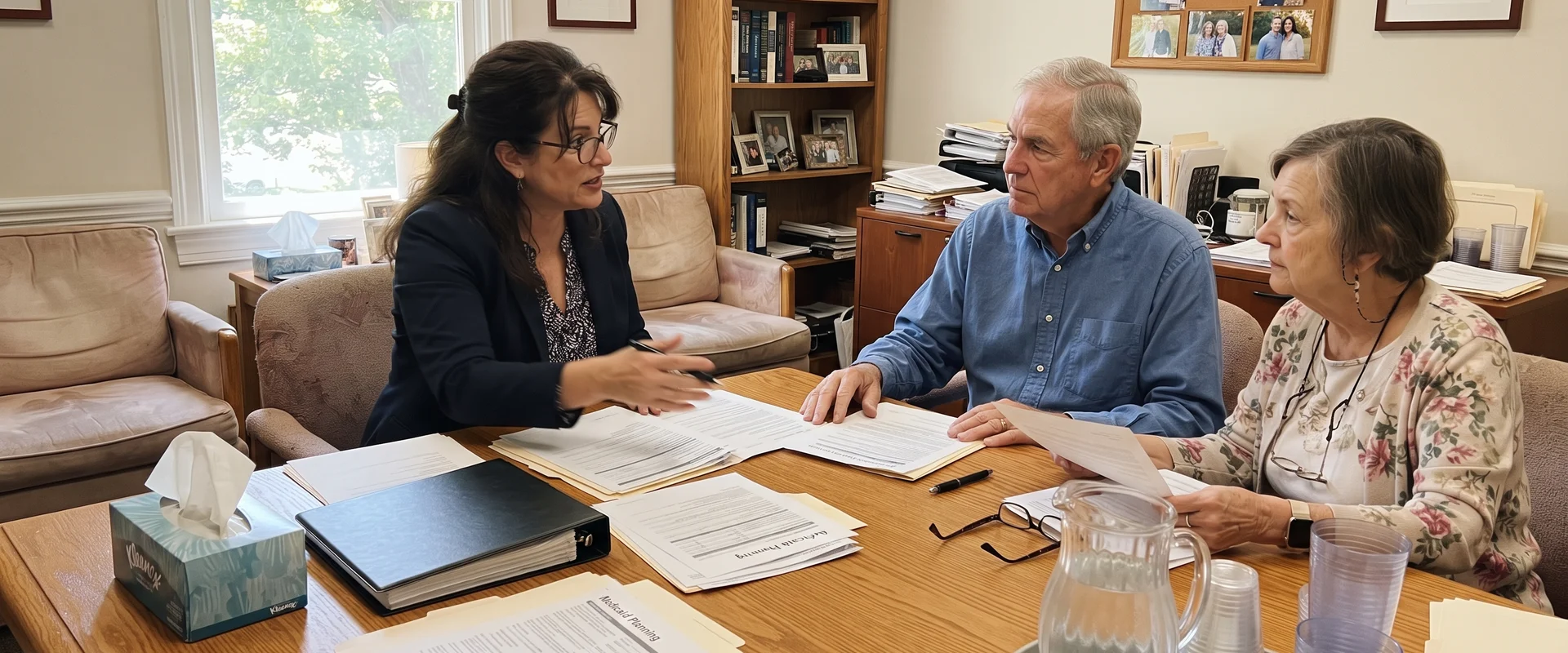
Elder law and Medicaid planning covers the legal work families need as a parent or spouse ages: qualifying for Medicaid to pay for a nursing home or assisted living without losing everything to the cost of care, setting up powers of attorney and health care directives before a crisis hits, guardianship and conservatorship when someone can no longer manage their own affairs, and protecting a house or savings from being wiped out by long-term care bills. In North Carolina, Medicaid has strict asset and income limits, and the rules around look-back periods, spousal impoverishment protections, and countable versus exempt assets are technical enough that a wrong move can cost a family months of eligibility or thousands of dollars. This is different from general estate planning: it's less about who inherits what and more about paying for care now while preserving what's left for a spouse or the next generation.
When comparing attorneys in this category, look for someone who handles Medicaid applications and appeals regularly, not as a side item to a general estate practice. Ask how they structure asset protection (irrevocable trusts, annuities, spend-down strategies), whether they coordinate with the nursing home or assisted living facility's billing office, and how they charge: flat fee for a Medicaid application versus hourly for ongoing planning. A good elder law attorney should also be comfortable explaining the five-year look-back period in plain terms and should ask about your family's full financial picture before recommending a strategy.
Charlotte has 22 attorneys and firms listed in this category. Our ranked guide to Charlotte estate planning attorneys scores firms on factors like experience with Medicaid and long-term care cases, client feedback, responsiveness, and transparency around fees, so you can shortlist firms suited to elder law specifically rather than starting from scratch. Details on how we weigh each factor are on our methodology page.