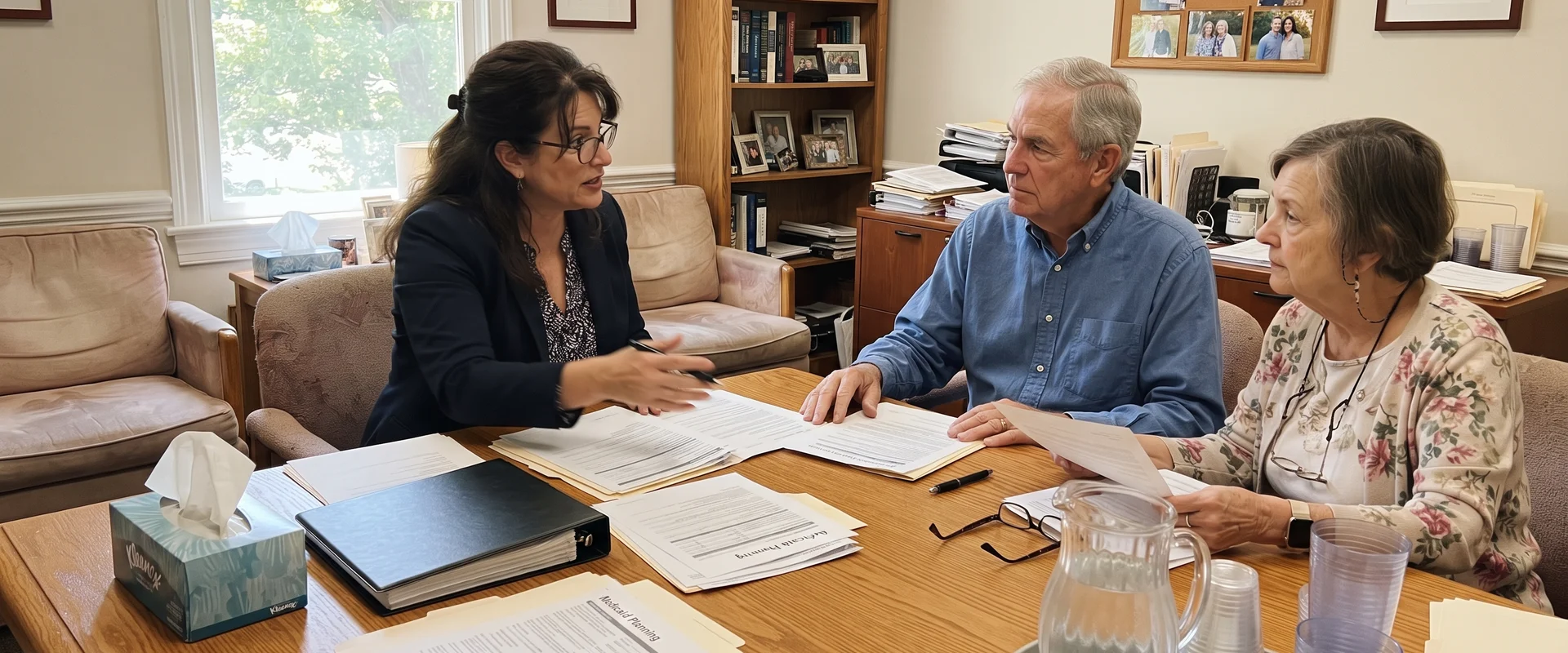
Elder law and Medicaid planning cover the legal work that comes up as people age or face a long-term illness: qualifying for Medicaid to help pay for nursing home or in-home care, protecting a spouse from being wiped out financially when the other needs care, setting up powers of attorney and health care directives, guardianship when someone can no longer manage their own affairs, and asset protection planning done early enough to hold up under Medicaid's look-back rules. It overlaps with general estate planning but requires deeper knowledge of North Carolina Medicaid eligibility rules, income and asset limits, and the five-year look-back period on transfers.
Concord families most often reach for an elder law attorney when a parent's care needs are increasing and the cost of a nursing home or assisted living facility is about to become a monthly reality, or when a crisis (a fall, a stroke, a dementia diagnosis) forces decisions fast. The earlier this planning starts, the more options a family has: done years ahead, it can mean legally protecting a home and savings; done during a crisis, it usually means more limited crisis-Medicaid strategies.
When comparing the 8 attorneys in this category, look for someone who handles Medicaid applications and appeals regularly (not just occasionally as part of a broader estate practice), explains the look-back period and countable vs. exempt assets in plain language, is upfront about fees before you sign anything, and treats the healthy spouse's financial security as part of the plan. Our scoring weighs verified experience, responsiveness, and client feedback so you can compare these firms on more than a search ranking.
See the full ranked list at the best estate planning attorneys in Concord, NC, and read how we score firms on our methodology page.